
Semi Truck Tire Repair in Charlotte
How We Handle Semi Truck Tire Repair
How we evaluate a commercial truck tire problem
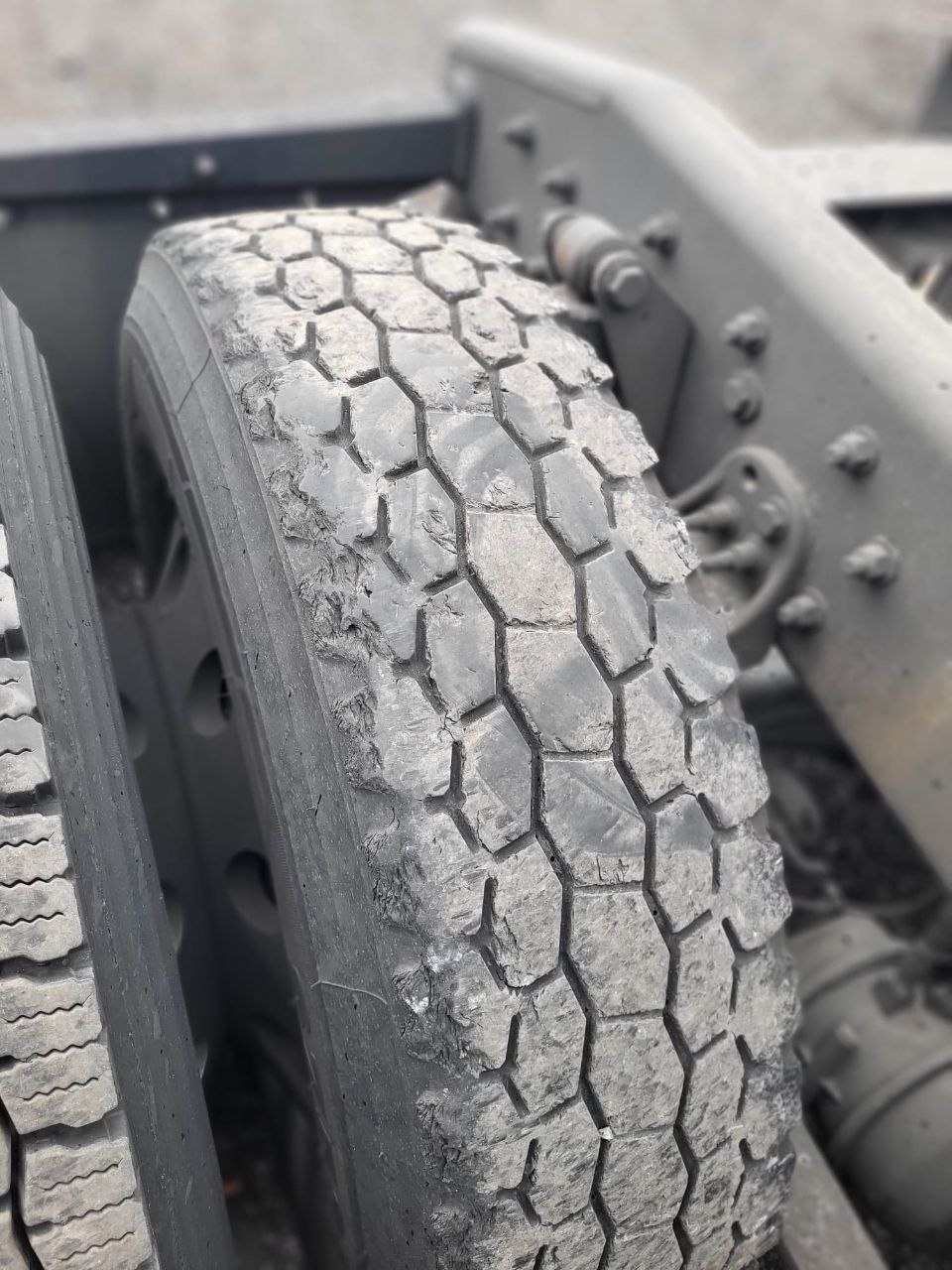
We begin with the driver’s report and the tire’s visible condition. The inspection may include tread and sidewall condition, inflation and leak points, valve and wheel condition, wear pattern, and nearby mechanical components when the symptoms indicate a broader issue. A scan tool does not determine tire condition; the tire and wheel-end must be physically inspected.Repair, replacement, and related service
Some punctures may be repairable when the location and condition meet the applicable repair criteria. Sidewall damage, exposed cords, severe irregular wear, structural damage, or other unsafe conditions may require replacement. We explain the findings and authorized scope before work begins. When wear patterns point to steering, suspension, brake, wheel-end, or alignment concerns, Truck Pit Stop can inspect those systems in the same Matthews repair facility.Our 2020 Volvo VNR case study shows why this coordinated approach matters. That truck arrived pulling from side to side and received front bearings, tie rods, drag-link components, two new steer tires, and alignment. A post-repair road test confirmed that the reported pulling condition was gone. Read the documented Volvo VNR front-end and tire case.Shop and mobile tire service near Charlotte
In-shop semi truck tire repair is available at 416 Seaboard Dr in Matthews, Monday through Friday from 8:00 a.m. to 7:00 p.m., and Saturday from 9:00 a.m. to 1:00 p.m. Mobile tire change may be available Monday through Friday from 8:00 a.m. to 7:00 p.m., and Saturday from 9:00 a.m. to 1:00 p.m. within approximately 50 miles, subject to technician availability, shop load, truck location, tire availability, and roadside safety. The current mobile service call is $350 plus $160 per labor hour with no two-hour minimum. Towing, when necessary, is arranged through an independent third party.Same-day completion depends on diagnosis, tire or parts availability, authorization, and current workload. For federal commercial-vehicle tire requirements, review 49 CFR §393.75.How to Get Started With Us
Testimonials
Transparent Shop Pricing
| What to expect | Typical timing or rate | What is included |
|---|---|---|
| Standard in-shop labor | $100 per billed labor hour | Diagnostics, parts, shop supplies, taxes, mobile or after-hours work, and specialty repairs are quoted separately. |
| Typical repair turnaround | 24–48 hours when possible | Timing depends on diagnosis, required parts, and current shop capacity. |
| Estimate and approval | Before repairs begin | The team explains the diagnosis, recommended repair, estimate, and expected completion time before work is approved. |
Case Studies


Our Team
Questions Drivers Ask About Semi Truck Tire Repair
Semi truck tire repair should be considered when you notice low pressure, repeated air loss, cuts, bulges, exposed material, irregular tread wear, vibration, pulling, or a change in steering feel. Do not rely on appearance alone if the truck is handling differently. Call Truck Pit Stop with the tire position, size, symptoms, and location so the team can advise whether to bring the truck to Matthews or check mobile-service availability.
Semi truck tire repair versus replacement depends on the damage location, extent, tire construction, remaining condition, and applicable safety criteria. A repairable tread-area puncture is different from sidewall damage, exposed cords, structural damage, or severe irregular wear. Truck Pit Stop physically inspects the tire before recommending repair or replacement and does not promise repairability from a phone description alone.
Semi truck tire repair timing depends on the inspection findings, tire size and availability, whether the wheel or valve requires attention, and whether alignment, steering, suspension, brake, or wheel-end work is also needed. Same-day completion may be possible for some repairs, but it remains subject to diagnosis, authorization, parts or tire availability, and the shop’s current workload.
Common contributors include punctures and road debris, underinflation or overinflation, impact damage, overloaded operation, valve or wheel leaks, brake or wheel-end heat, worn steering or suspension components, and incorrect alignment. The wear pattern can be evidence of a broader mechanical issue, which is why our inspection considers nearby systems instead of treating every tire complaint as an isolated puncture.
Commercial truck tires should be evaluated and serviced with the correct equipment and safety procedures. Roadside wheel and tire work also exposes the driver and technician to traffic hazards. Truck Pit Stop recommends professional inspection rather than a do-it-yourself repair. If the truck cannot be driven safely, call to discuss mobile tire change availability or third-party towing arrangements.
Semi truck tire repair pricing depends on tire size and type, damage, repairability, replacement choice, labor, and any related wheel-end, steering, suspension, brake, or alignment work. We do not publish a generic $50–$200 promise because it can misrepresent a commercial repair. The shop confirms the findings and authorized scope first. Mobile response, when available, is currently a $350 service call plus $160 per labor hour, with no two-hour minimum.
Related Truck Repair Services
Related Semi Truck Repair Services