
Emissions Light On but DPF Soot Normal and DEF Full? It May Be Electrical
An emissions system fault on the dash, with a normal DPF soot level and a full DEF tank, is one of the most commonly misdiagnosed problems on a modern heavy-duty truck. This is a walkthrough of one we repaired at our shop in Matthews, NC, on a truck from our own fleet.
On this page
- What an emissions system fault actually tells you
- Why a normal DPF soot level changes the diagnosis
- Why a full DEF tank changes it too
- What the cheap assumption costs
- What this emissions system fault turned out to be
- How to tell a consumable problem from a circuit problem
- Why the mobile diagnosis mattered
What an emissions system fault actually tells you
It tells you where the system noticed a problem. It does not tell you where the problem lives. That distinction is the whole job.
Aftertreatment on a current truck is a dense sensor network. Differential pressure across the filter, NOx sensors upstream and downstream, several exhaust temperature sensors, DEF level, DEF quality, DEF pressure and dosing valve feedback. Every one of them reports through a connector, a length of harness and a ground.
So an emissions system fault can be raised by a component that is working perfectly, because the wiring feeding it is not.
Why a normal DPF soot level changes the diagnosis
If a diesel particulate filter is genuinely plugged, differential pressure across it climbs and the soot load reads high. On this truck it was not high. It was normal.
That single reading rules out the most commonly sold repair for an emissions system fault before anybody opens a toolbox.
Why a full DEF tank changes it too
Diesel exhaust fluid faults come from level, quality or delivery. The tank was full, with good fluid in it, filled recently. Fluid that meets the EPA emissions requirements for heavy-duty engines does not throw a quality code on its own.
Both consumables were fine. The truck was reporting a problem with a system whose working parts were in order.
What the cheap assumption costs
At that point a shop has a choice. It can take the emissions system fault at face value, book a forced regeneration or a filter cleaning, and send the truck out.
If the light returns, the next rung is a filter replacement, then the DEF pump or dosing unit, then the SCR catalyst. Each one is a real repair a technician can justify on paper. Each one is more expensive than the last.
None would have fixed this truck, because the filter and the fluid were never the cause.
That path is not a scam. It is an incentive. Guessing is billable and diagnosis largely is not, so the trade drifts quietly toward replacing parts rather than finding faults. A driver who has paid for a DPF cleaning and still has the light on has just funded somebody else’s process of elimination.
What this emissions system fault turned out to be
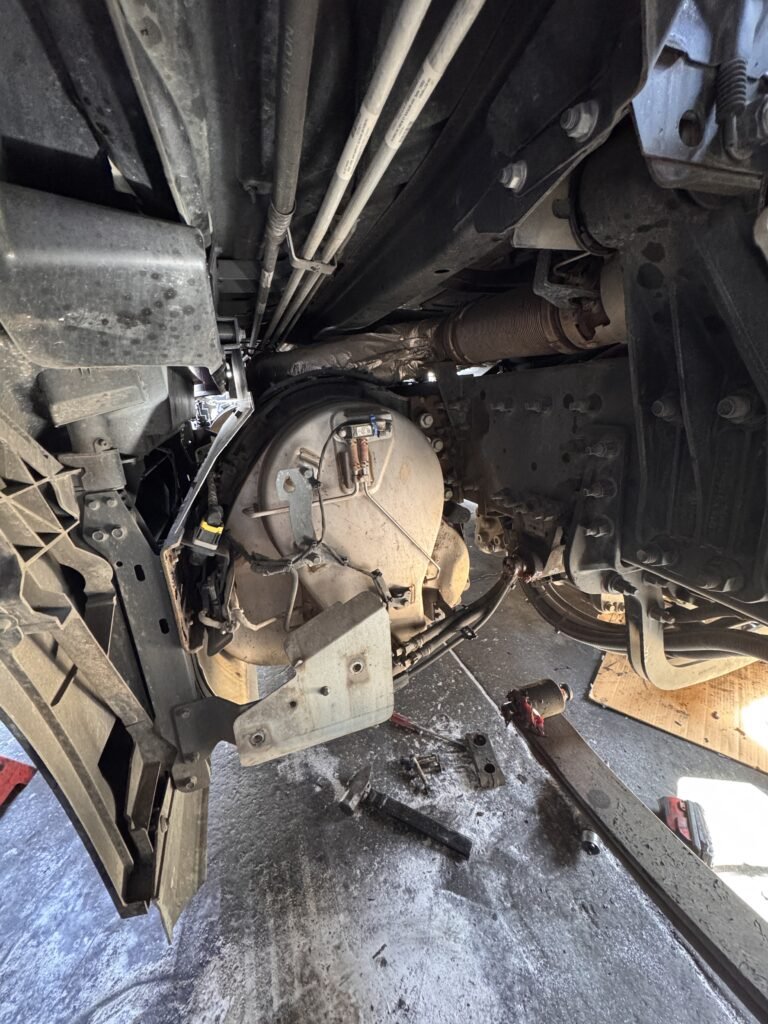
Electrical. The aftertreatment system was reporting a problem because the signal path was wrong, not because the hardware it monitors was failing.
Chafed insulation, a corroded pin, water sitting in a connector body or a poor ground will all produce a fault that names a component rather than the wiring behind it. We found the fault in the DPF and DEF circuit, repaired it, cleared the codes and returned the truck to its parking location. The warning stayed off.
The repair sits at the overlap of semi-truck electrical repair and computer diagnostics, which is exactly why a shop that treats emissions work as a filter-cleaning service will miss it.
How to tell a consumable problem from a circuit problem
You cannot diagnose your own emissions system fault from the driver’s seat. But you can arrive at a shop with enough information to notice a diagnosis that is skipping steps.
Read your soot level before agreeing to a cleaning. A normal soot load and a plugged-filter diagnosis do not belong in the same conversation without an explanation.
Check your DEF level and last fill. A full tank of good fluid alongside a fluid-related code is worth a question.
Ask what else was tested. Not what the code says, but what was checked to confirm it. Connectors, grounds, harness condition and live sensor values are all part of a real diagnosis.
Be wary of a quote that arrives before a diagnosis. A price for DPF repair inside five minutes of hearing the symptom is a price for a guess.
Why the mobile diagnosis mattered
The first look happened where the truck was parked, not after a tow. A truck diagnosed in place gets towed once, to the right repair, instead of being moved to a shop to find out what the repair is.
For an emissions system fault that turns out to be electrical rather than mechanical, that difference is most of the bill.
If your emissions light is on
We handle diesel engine diagnostics, DPF and DEF aftertreatment work, semi-truck engine repair and mobile service around Matthews and the Charlotte metro. If you have an emissions system fault that has already been fixed somewhere else and came back, that is a normal thing to bring us.
Call the shop, tell us what the dash is saying and what your soot and DEF readings are. That conversation is free, and it is usually enough to tell you whether you are looking at a consumable or a circuit.