
SPN 4364 FMI 18: SCR Conversion Efficiency Low (What It Means, Why It Derates, How It Gets Fixed)
SPN 4364 FMI 18 is one of the most common aftertreatment codes on a modern semi truck, and one of the most expensive to ignore. The ECM compared the NOx reading before the SCR catalyst with the reading after it, and the catalyst is not cleaning up as much NOx as it should. The code does not tell you why. The real cause can be anything from a bad jug of DEF to a plugged catalyst.
New to SPN and FMI codes? Start with our semi truck fault codes guide, then come back here for this one.
What SPN 4364 FMI 18 means on the dash
Break the code into its two parts. SPN 4364 is the parameter: aftertreatment SCR conversion efficiency. FMI 18 is the failure type: data valid but below normal, moderately severe. In plain words, the sensors are working, the numbers they report are believable, and those numbers say the SCR system is not converting enough NOx.
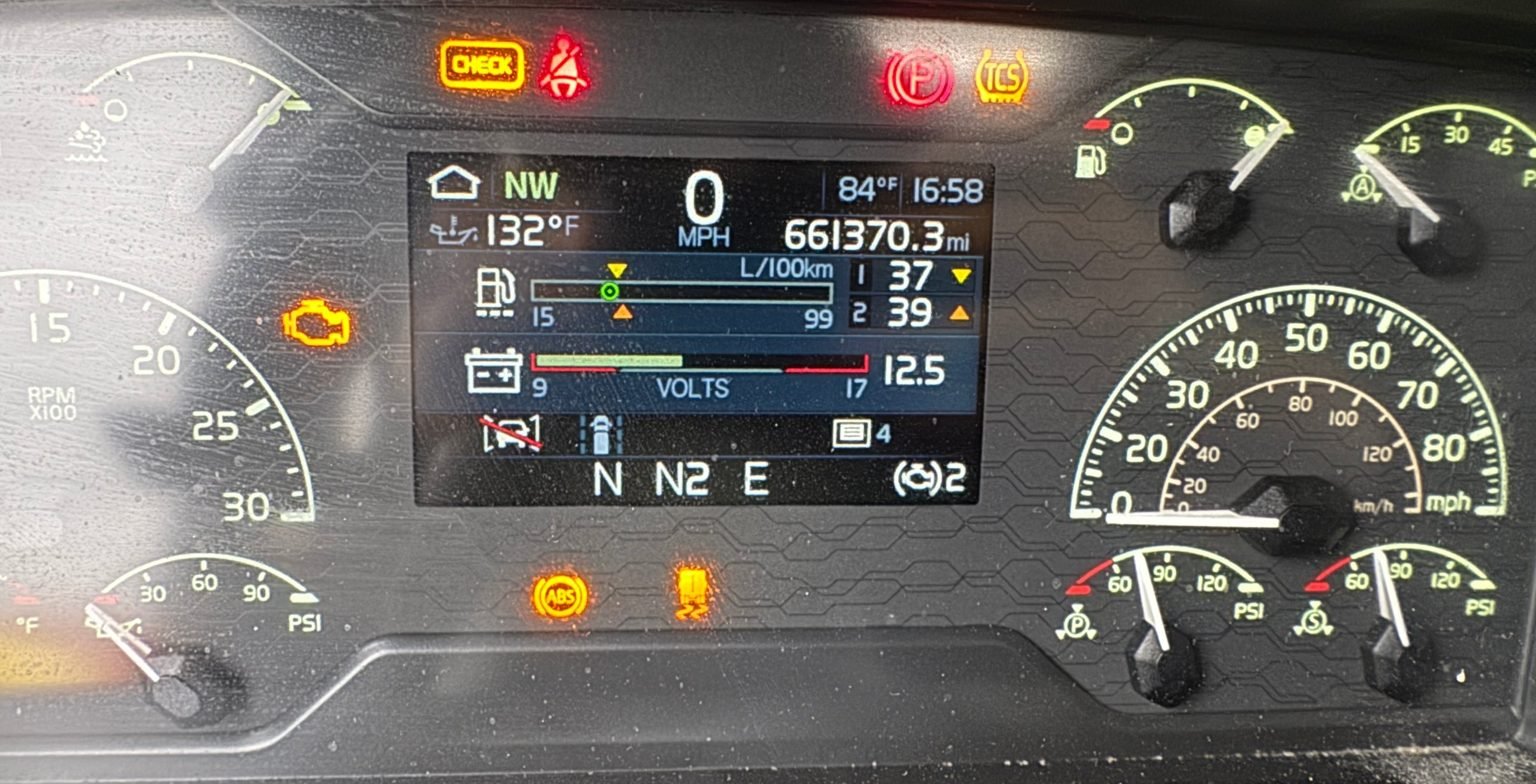
The ECM runs this check in the background once the engine is warm and both NOx sensors are reporting. When the outlet reading stays too close to the inlet reading over the monitoring window, the fault goes active. You will see the check engine lamp first, sometimes with the DEF lamp. If the fault stays active through more drive cycles, the engine maker’s inducement strategy starts, and that is where the derate comes from.
SPN 4364 does not mean the SCR catalyst is bad. It means the system as a whole is underperforming, and the catalyst is only one of several parts that can cause that.
Same code, different engines: Cummins X15, Detroit DD15 (SPN 520372), Volvo D13, Paccar MX-13, Mack MP8
SPN 4364 is a J1939 standard parameter, so it shows up on every engine family. Each maker wraps it in its own code system and derate logic.
- Cummins ISX15 and X15. INSITE shows SPN 4364 FMI 18 with a Cummins fault code number, and the Cummins derate steps are tied to it.
- Detroit DD13 and DD15. Detroit often pairs SPN 4364 FMI 18 with manufacturer code SPN 520372 FMI 18, the severe derate warning. If you see 520372, the truck is already on the clock.
- Volvo D13 and Mack MP8. Premium Tech Tool reports the same fault. The two share an engine platform, so the diagnosis is the same.
- Paccar MX-13. Davie shows the J1939 code with a Paccar P-code, and Kenworth and Peterbilt dashes display an SCR warning with a countdown.
The brand changes the software and the parts we order. It does not change the list of things that cause the code.
The derate timeline and why clearing it does not work
Every engine maker treats SPN 4364 as an emissions inducement fault, so the ECM makes the truck progressively harder to drive until the fault is repaired. The countdown varies by engine maker, but the pattern is the same: a warning lamp, then a torque derate, then a road speed limit. The final stage is the 5 mph limit drivers dread, which is its own inducement code, SPN 5246.
Clearing the code with a handheld reader does not reset that clock. The ECM stores the efficiency history and the inducement stage. The monitor runs again on the next warm drive cycle, the fault goes active again, and the countdown picks up where it left off.
The only thing that stops the inducement is a repair that makes the SCR efficiency test pass, followed by the OEM reset in the service software. Our computer diagnostics service covers that reset on all the engine families above.
What actually causes low SCR efficiency
These are the causes we see most, roughly in the order we check them.
- DEF quality or the wrong fluid. Diluted, old or heat-damaged DEF, or something other than DEF in the tank. If the fluid is off, conversion drops and the code sets even though every part on the truck is fine.
- DEF doser or injector. If the doser tip is crusted with crystals, partially plugged or leaking, the catalyst does not get the dose the ECM thinks it sent.
- NOx sensor drift. An outlet sensor that reads high, or an inlet sensor that reads low, makes a healthy catalyst look like a failing one. Sensors drift with age, heat and moisture before they throw their own code.
- SCR catalyst face-plugged or contaminated. Crystallized DEF on the face, oil or coolant from an upstream engine problem, or a catalyst that has aged out. This is the cause everyone assumes first, and it is often not the one.
- Exhaust leak before the outlet sensor. A cracked clamp, bad gasket or rusted joint pulls in fresh air and throws off the reading.
- DEF pump pressure. A weak pump, plugged DEF filter or crystallized line means the doser cannot deliver the commanded quantity.
Upstream engine problems matter too. A truck burning oil or running a leaking EGR cooler will foul the DPF and SCR together, so we look at the whole aftertreatment system rather than swapping the first part the code points at. Our DPF cleaning and repair page covers the filter side of that same system.
What you can check before you call
You cannot run the efficiency test from the driver’s seat, but you can rule out the cheap causes.
- DEF level. Fill the tank from a sealed jug or a pump you trust.
- DEF concentration. If you or your fleet shop has a refractometer, test the fluid in the tank. Off-spec DEF is common on trucks that fill from bulk totes.
- Crystallized DEF. Look for white crust at the tank cap, at the doser on the exhaust, and along the DEF lines.
- Exhaust leaks. Soot streaks at a clamp or flange ahead of the outlet NOx sensor mean a leak that will skew the readings.
- Companion codes. Write down every active code, not just 4364. A NOx sensor, DEF pressure or DEF quality code next to it usually tells us where to start.
If the dash shows a countdown, get the truck in before the clock runs out. If it is already speed-limited and cannot safely make the trip, our mobile truck repair truck can come to you. Mobile repair calls carry a 2-hour labor minimum.
How we diagnose and repair it
Here is how a SPN 4364 FMI 18 job runs at the shop.
- Read the full fault history with manufacturer-level diagnostic software. We look at fault counts, freeze-frame data and the inducement stage, not just the active code.
- Test DEF quality and dosing. DEF concentration in the tank, then the dosing quantity test to confirm the pump and doser deliver what the ECM commands.
- Compare live NOx readings. Inlet versus outlet, at idle and under load. A sensor that does not respond gets a circuit and harness check before anyone orders a part.
- Inspect the catalyst and exhaust. Doser tip, catalyst face, clamps, gaskets and any leak ahead of the outlet sensor.
- Repair with dealer-genuine OEM parts. NOx sensors, doser, DEF pump, filter, lines, clamps or the SCR catalyst, whichever the testing points to.
- Forced SCR test, regen, reset, verify. We run the OEM SCR efficiency test, regen if the DPF needs it, reset the inducement, and road test to confirm the fault stays inactive.
Our fix for aftertreatment codes is diagnose, repair, regen, OEM parts. We do not do DPF or SCR deletes. A delete turns a repair bill into a DOT, resale and warranty problem that follows the truck.
If the SCR fault turns out to be a symptom of an engine problem, such as oil consumption or a leaking EGR cooler, our semi truck engine repair service handles it in the same bay.
Most repairs are finished the same day. Parts-ordered or late-arrival jobs are finished first thing the next business morning, with timing confirmed after inspection. Shop labor is $100 per hour, and the driver lounge has Wi-Fi, coffee and a washer and dryer while you wait.
Not in Charlotte yet? Start with remote diagnostics
If the lamp came on out of town and you are deciding whether to limp in or stop, our remote truck diagnostics service reads the active codes and inducement stage before you commit to the drive, so you know what parts to expect and whether mobile service makes more sense.
Truck Pit Stop is at 416 Seaboard Dr in Matthews, just off US-74, and handles truck repair in Charlotte, NC for Freightliner, Peterbilt, Kenworth, Volvo, Mack, International and Western Star. We speak Russian and Ukrainian. Book an appointment or call the shop with the code on the dash.
FAQ
Can I keep driving with SPN 4364 FMI 18 active?
Usually yes, for a while. The first stage is a warning lamp with full power. The derate and speed limit come later, on a countdown that varies by engine maker. Use that window to get the truck to a shop. Do not wait for the speed limit to hit, because at that point a short trip becomes a mobile service call.
Will clearing the code with a code reader fix it?
No. The ECM keeps the efficiency history and the inducement stage. The monitor runs again on the next warm drive cycle, the fault comes back, and the countdown continues where it stopped. The only thing that resets the inducement is a repair that passes the SCR efficiency test, followed by the OEM reset in the service software.
Does SPN 4364 mean I need a new SCR catalyst?
Not usually. The code means the SCR system as a whole is underperforming. DEF quality, a crusted doser, a drifted NOx sensor, low DEF pressure or an exhaust leak all cause the same code. We test dosing, DEF concentration and sensor readings before anyone orders a catalyst, because the catalyst is the most expensive part in the chain.
Do you do DPF or SCR deletes to get rid of this code?
No. We diagnose the cause, repair it with dealer-genuine OEM parts, run the forced SCR test and regen, and reset the inducement. A delete creates DOT, resale and warranty problems that follow the truck. A properly repaired SCR system runs clean, keeps full power and keeps the code off.
Can you read my codes before I drive to Matthews?
Yes. Our remote diagnostics service lets us pull the active codes and the inducement stage while the truck is still on the road. We can tell you whether it is safe to drive in, what parts to expect, and whether a mobile repair call makes more sense. Mobile repair calls have a 2-hour labor minimum.