
Volvo D13 EGR Cooler Failure: Why the Surge Tank Bubbled
A Volvo D13 EGR cooler failure can pressurize the cooling system and look like a head-gasket problem. This truck was diagnosed and repaired without pulling the head.
Symptoms that looked like a head gasket
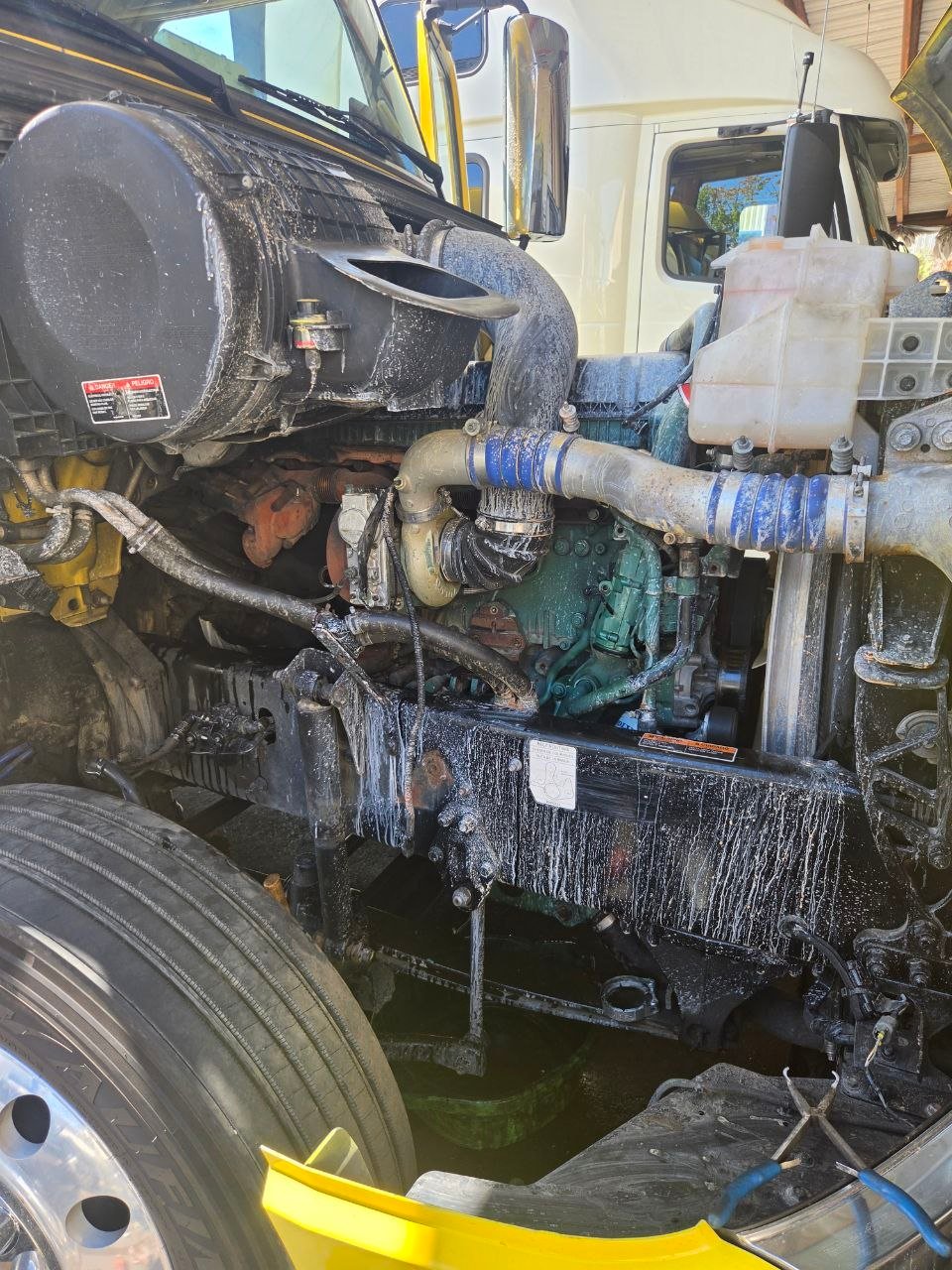
Volvo D13 came in bubbling the surge tank, pushing coolant out the overflow, and running hot. Those symptoms can point at a head gasket, which is exactly why you diagnose it before anyone starts pulling a head.
The actual fault: the EGR cooler
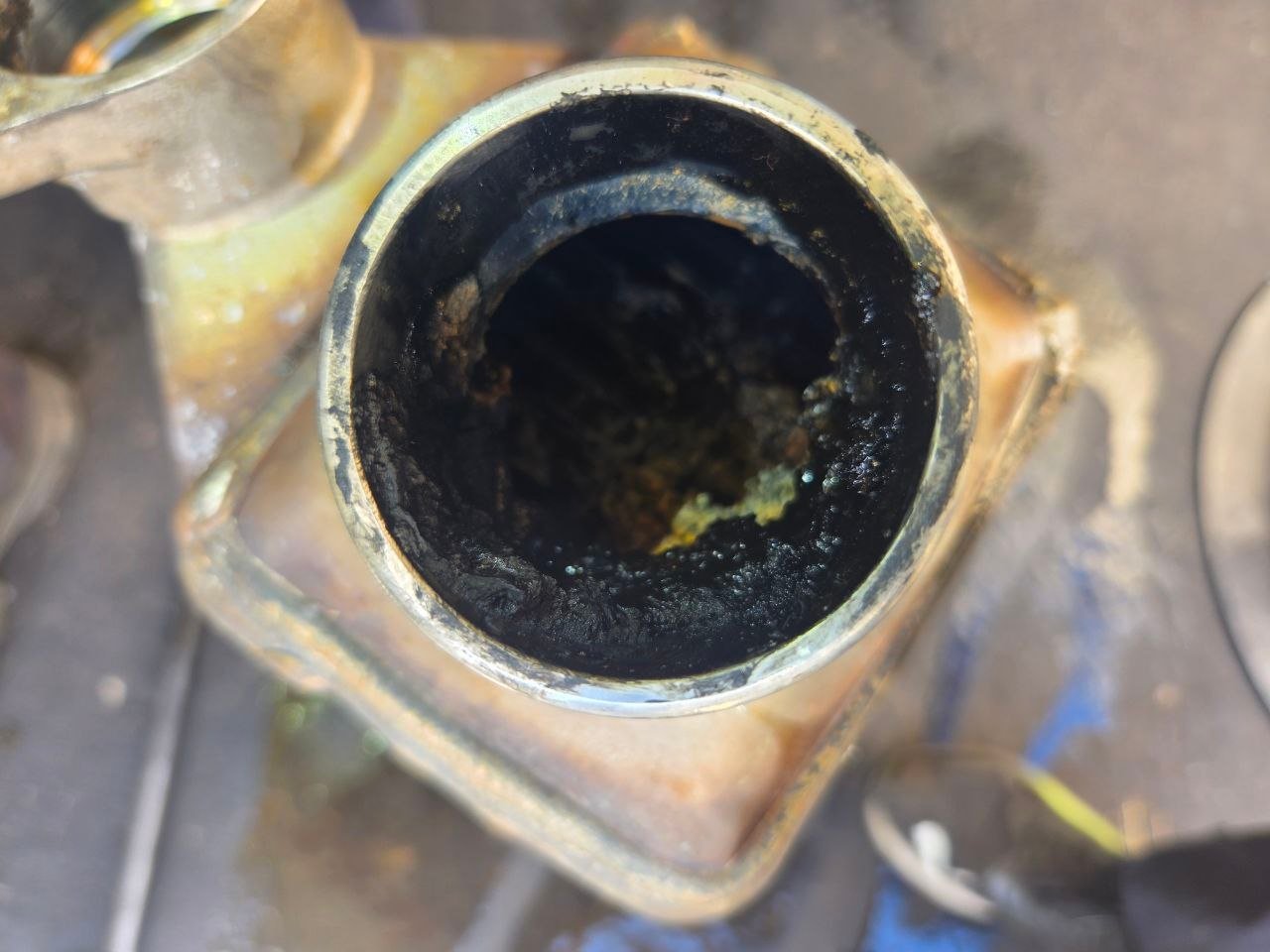
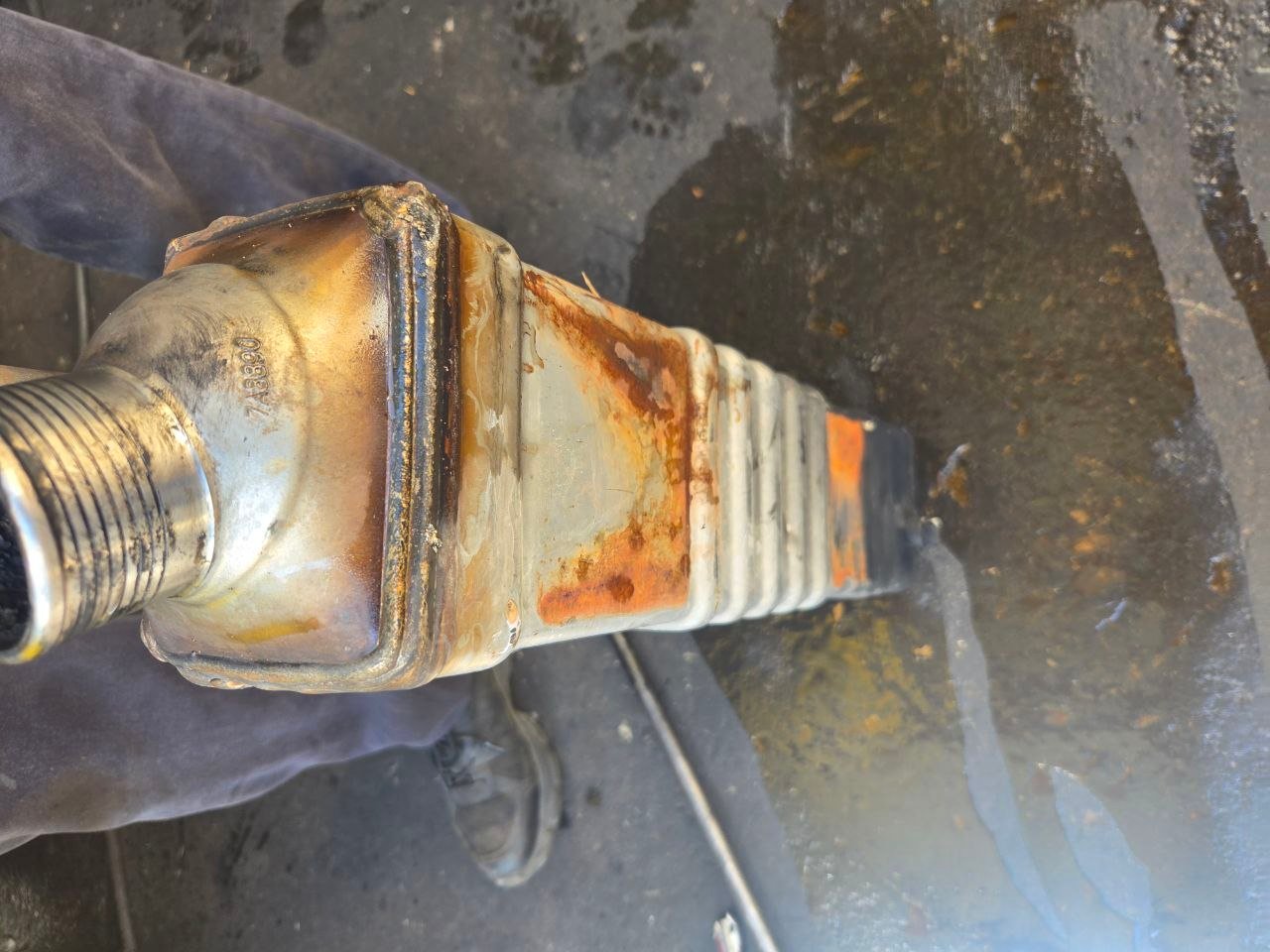
It was the EGR cooler. The core had failed internally, between the exhaust side and the coolant side. Most of the time that kind of failure leaks coolant into the exhaust: white smoke, a coolant level that keeps dropping, nothing on the ground. This one went the other way—an uncommon failure mode. Under load the exhaust side was running higher pressure than the cooling system, so combustion gas was being forced into the coolant and pressurizing the whole system. The photos show the gas side packed with soot.
Why a Volvo D13 EGR cooler failure can look like a head gasket
An EGR cooler moves hot exhaust gas through a heat exchanger while engine coolant flows through a separate passage. If the barrier between those passages fails, the two systems can communicate. The direction of the leak depends on operating conditions and pressure. Coolant can enter the exhaust path, but exhaust pressure can also enter the cooling system. That second path explains why this truck had bubbles in the surge tank and coolant escaping through the overflow. The symptoms identify a pressurized cooling system; by themselves, they do not identify which component let gas in.
The soot shown in our close-up photo is on the cooler’s gas side. Soot there is expected in an exhaust passage, so a photo alone does not prove an internal leak. The diagnosis came from the full set of symptoms and examination of the failed cooler. The key lesson from this Volvo D13 EGR cooler failure is to confirm the source of pressure before approving major engine disassembly.
What a cooling-system diagnosis should answer
When a truck arrives with coolant overflow or overheating, the first question is whether the system is losing coolant, gaining pressure abnormally, or both. A technician can check the surge tank and cap, inspect for external leaks, review how the symptoms change as the engine runs, and test the cooling system. Where the evidence points to internal gas entry, the EGR cooler and engine should both be considered. The exact sequence depends on the truck and the findings; a bubbling tank does not automatically mean a head gasket, and a cooler should not be replaced on symptoms alone.
For this repair, the failed cooler was replaced, the coolant was refilled and bled, and the system was pressure-tested. The truck returned to service in about three hours. That is this truck’s result, not a standard repair time for every Volvo D13 EGR cooler failure. Parts availability, access, and any additional damage can change the work required.
What to tell the shop if your Volvo D13 is running hot
Tell the technician when the bubbles or overflow appear: at idle, during a pull, or after shutdown. Mention any coolant top-offs, white exhaust smoke, temperature warnings, and whether coolant is visible on the ground. Those details help narrow the diagnostic path. If a stop warning appears or the engine is overheating, follow the truck’s warning instructions and have it checked promptly. The Volvo Trucks Driver Guide describes a stop notification for extremely low coolant level.
Repair and result
New EGR cooler, coolant refilled and bled, system pressure-tested. Three hours and the truck was back on the road. No head job.
When to get it checked
Bubbles in the surge tank, coolant pushing out the cap, or coolant disappearing with no leak underneath: stop and get it checked. Keep driving it and a repair like this can turn into a warped head.
Related service: Volvo truck repair and maintenance near Charlotte.
Truck Pit Stop, 416 Seaboard Drive in Matthews, NC. Call and we will get you in.
Говорим по-русски и по-українськи.