
Semi Truck AC Repair in Charlotte
How We Handle Semi Truck AC Repair
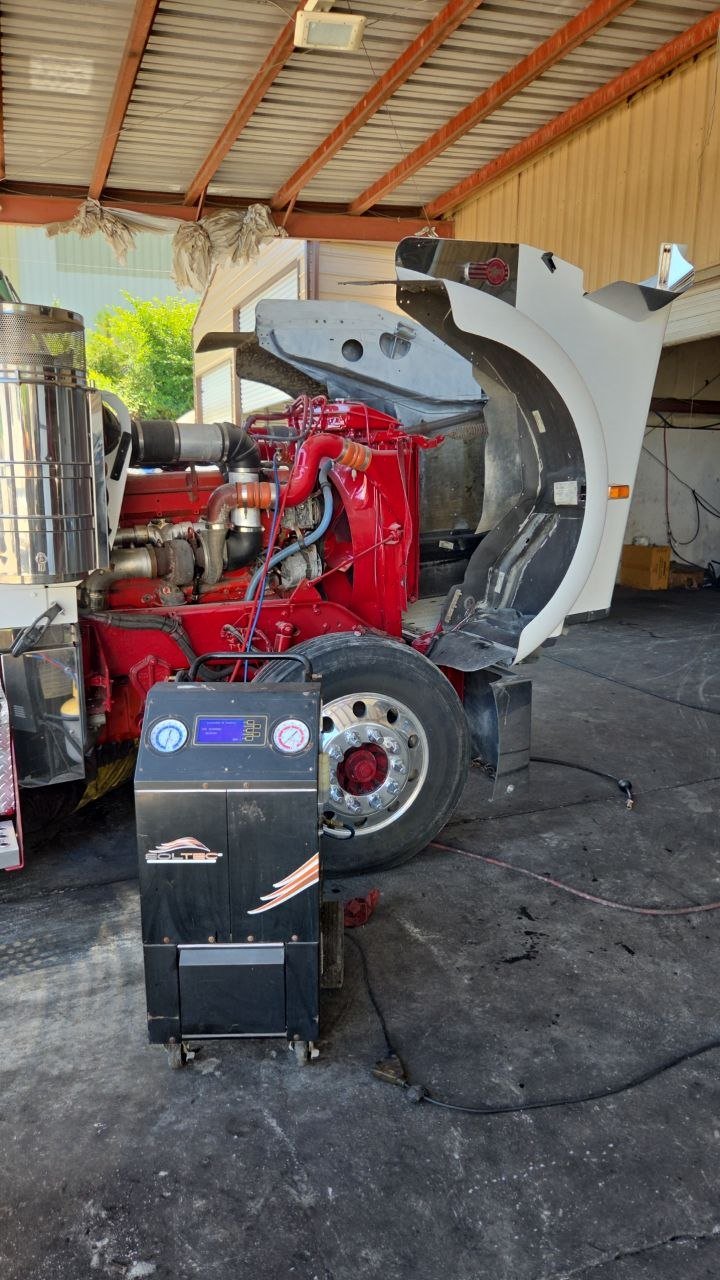
Effective semi truck AC repair starts with testing system performance under the conditions where the problem occurs. Our technicians inspect vent temperature, high- and low-side pressure behavior, and visible signs of refrigerant or oil leakage.
Testing can also include compressor and clutch operation, belts, hoses, condenser airflow, blower performance, electrical controls, wiring, relays, fuses, sensors, and related fault information when applicable.
The objective is to separate the actual cause from symptoms that can look similar. Warm air can result from low refrigerant, a leak, inadequate condenser airflow, compressor trouble, a blend-door or control problem, or an electrical fault.
Weak airflow may require a different diagnostic path than a system that moves air normally but does not cool. We explain the findings and recommended repair before work proceeds.
Truck Pit Stop provides in-shop semi truck AC repair in Matthews, North Carolina, Monday through Friday from 9 a.m. to 6 p.m. Repair timing depends on diagnosis, parts availability, system condition, and current shop capacity.
For general federal information about vehicle air-conditioning refrigerants and service requirements, see the EPA Motor Vehicle Air Conditioning program. Call (704) 219-3199 or book an appointment for diagnosis.
How to Get Started With Us
Testimonials
Transparent Shop Pricing
| What to expect | Typical timing or rate | What is included |
|---|---|---|
| Standard in-shop labor | $100 per billed labor hour | Diagnostics, parts, shop supplies, taxes, mobile or after-hours work, and specialty repairs are quoted separately. |
| Typical repair turnaround | 24–48 hours when possible | Timing depends on diagnosis, required parts, and current shop capacity. |
| Estimate and approval | Before repairs begin | The team explains the diagnosis, recommended repair, estimate, and expected completion time before work is approved. |
Case Studies

Our Team
Questions Drivers Ask About Semi Truck AC Repair
Common signs include warm air, cooling that fades or works intermittently, weak airflow, unusual compressor or blower noise, odors, water where it should not be, or controls that do not respond correctly. A diagnostic test is needed to identify the cause.
Inspection timing depends on use, symptoms, operating conditions, and maintenance history. Schedule diagnosis when cooling performance changes rather than repeatedly adding refrigerant without finding why it is low.
Possible causes include refrigerant leakage, restricted condenser airflow, compressor or clutch problems, belt or hose damage, blower faults, electrical controls, relays, fuses, wiring, sensors, or cab air-distribution problems.
Drivers can check controls and note when the symptom occurs, but refrigerant recovery and charging, pressure testing, leak diagnosis, and electrical or mechanical repairs should be handled with the proper equipment and procedures.
Some faults can be diagnosed and repaired the same day, while compressor damage, difficult leaks, contaminated systems, electrical faults, or unavailable parts can require more time. We provide an estimate after diagnosis
Cost depends on the confirmed cause, required parts, refrigerant and oil needs, labor, and whether related electrical or airflow problems are present. We do not advertise a generic price range because a control fault and a compressor-system repair are materially different jobs. Call for scheduling
Related Truck Repair Services
Related Semi Truck Repair Services